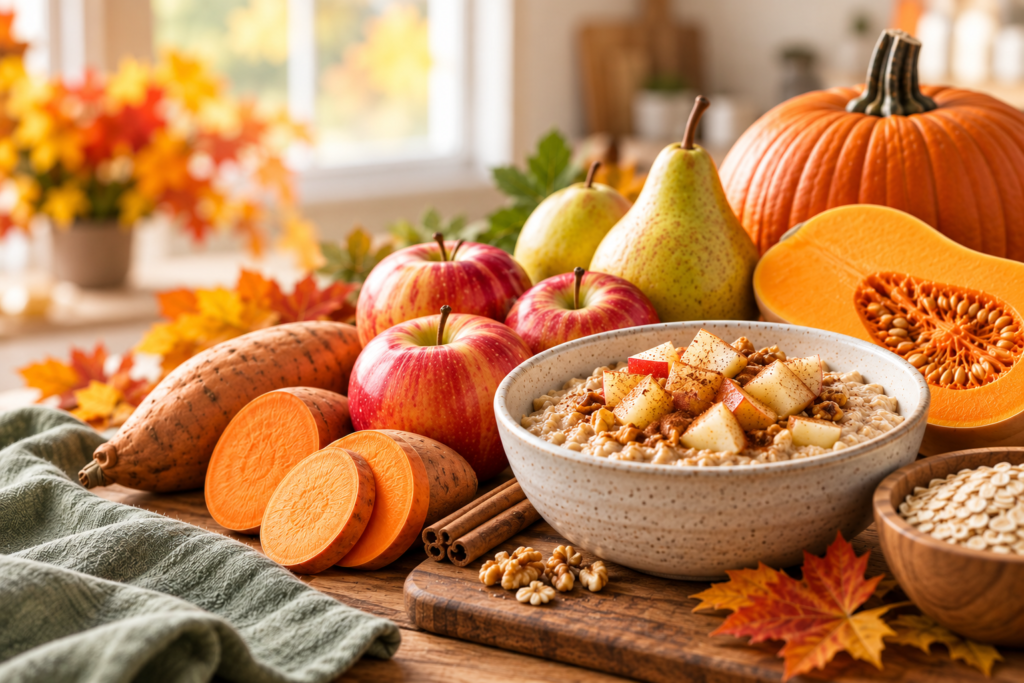
Fall brings cooler weather, warm soups, roasted vegetables, oatmeal, apples, pumpkin, and all the comforting foods that make this season special. But if you have a history of diverticulitis, you may wonder which fall foods are good choices—and which foods you may need to temporarily limit when symptoms flare.
The answer depends largely on where you are in the diverticulitis cycle.
When you’re feeling well after diverticulitis, your healthcare provider may recommend a fiber-rich eating pattern that includes fruits, vegetables, whole grains, and legumes – this stage is also referred to as diverticulosis. During an active diverticulitis flare, however, your healthcare provider may temporarily recommend clear liquids, followed by lower-fiber foods as symptoms improve.
That distinction is important. A nutritious, high-fiber food that makes sense when you’re feeling well may be something you temporarily limit during an active flare.
Quick Answer: When you’re feeling well after diverticulitis, fall foods such as pumpkin, sweet potatoes, apples, pears, oatmeal, squash, carrots, beans, lentils, and whole grains can help you build a fiber-rich diet. During an active flare, your healthcare provider may instead recommend clear liquids for a short period, followed by low-fiber foods until symptoms improve.
Diverticulitis vs. Diverticulosis: Why It Matters for Your Diet
Before filling your grocery cart, it helps to understand an important distinction.
Diverticulosis means small pouches, called diverticula, have formed in the wall of the colon. Diverticulitis occurs when one or more of those pouches become inflamed.
When you’re not experiencing an acute flare, your healthcare provider may encourage a diet containing more fiber. The National Institute of Diabetes and Digestive and Kidney Diseases (NIDDK) notes that research suggests eating more high-fiber foods and less red meat may help lower the risk of diverticulitis.
During an acute flare, the approach can be very different. The American Gastroenterological Association advises a clear-liquid diet during the acute phase of uncomplicated diverticulitis, with the diet advancing as symptoms improve.
Think of your diet as something that changes with your digestive system rather than following one set of rules all year long.
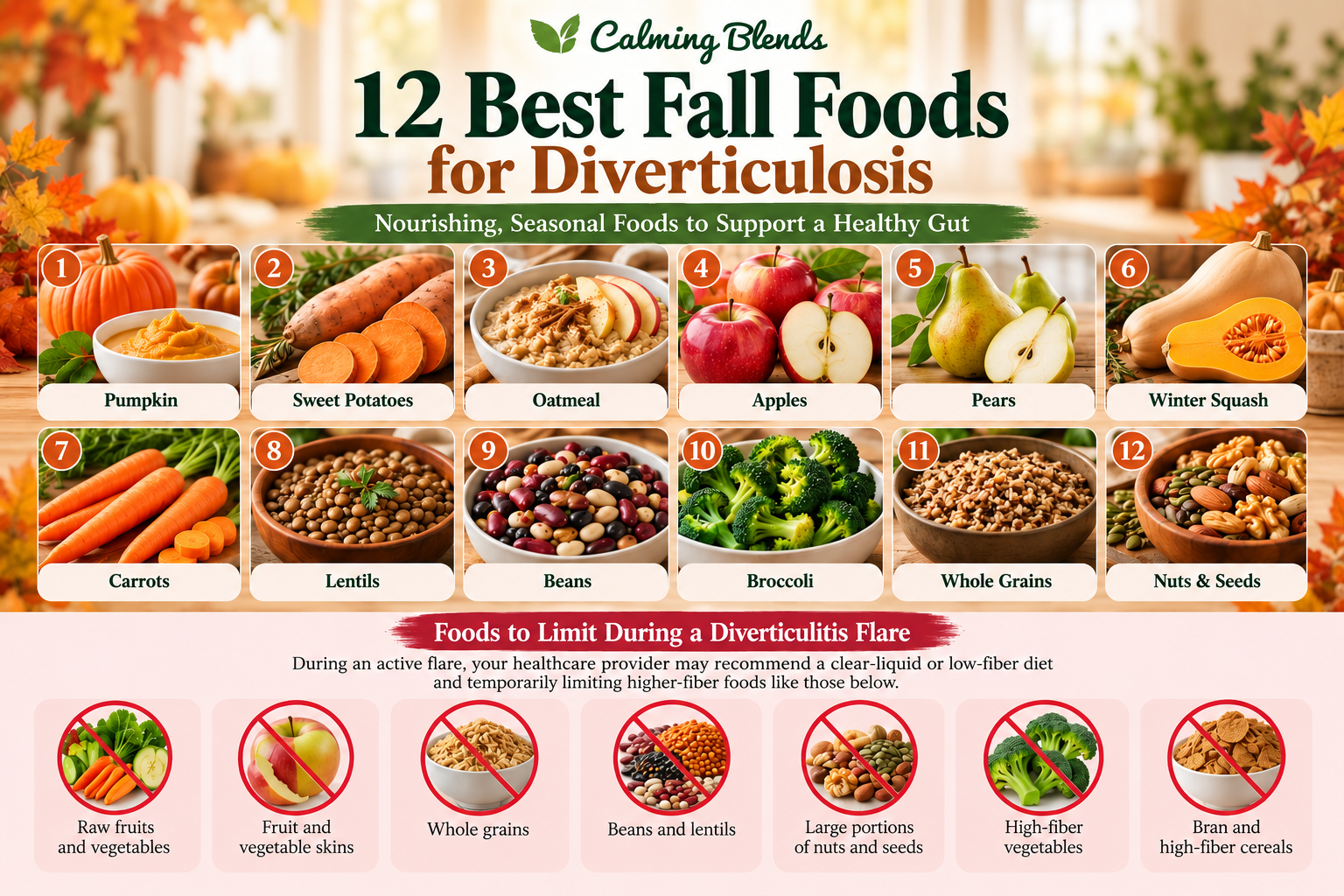
12 Best Fall Foods for Diverticulitis
The following foods are primarily intended for times when you’re feeling well and have been cleared to return to a normal or higher-fiber diet.
1. Pumpkin
Few foods say fall quite like pumpkin.
Pumpkin can be added to oatmeal, soups, smoothies, muffins, pancakes, and other seasonal recipes. Its naturally soft texture also makes it easy to incorporate into warm fall meals.
Choose plain pumpkin purée rather than pumpkin pie filling when possible. Pumpkin pie filling typically contains added sugar and spices, while plain pumpkin gives you more control over what goes into your meal.
During recovery from a flare, your healthcare provider may allow cooked or canned vegetables without skins or seeds as you gradually transition back toward your regular diet.
Fall idea: Stir a few spoonfuls of plain pumpkin purée into warm oatmeal and add a sprinkle of cinnamon.
2. Sweet Potatoes
Sweet potatoes provide fiber while also working beautifully in comforting fall meals.
According to NIDDK dietary information, one cup of cooked sweet potato contains approximately 6.3 grams of fiber.
Try sweet potatoes baked, mashed, roasted, or blended into soup.
If you’re transitioning from a low-fiber diet after a flare, your healthcare provider may recommend starting with softer, lower-fiber foods and gradually increasing fiber rather than immediately eating large portions of high-fiber foods.
3. Oatmeal
A steaming bowl of oatmeal is an easy cold-weather breakfast.
Oats are a whole grain and provide dietary fiber. They also make an excellent base for other fall flavors, including pumpkin, cooked apples, pears, and cinnamon.
If you’ve recently had a flare, however, don’t automatically jump straight back into a large bowl loaded with oats, nuts, seeds, and dried fruit. Fiber may need to be reintroduced gradually as your symptoms improve and according to your healthcare provider’s recommendations.
4. Apples
Apple season gives you dozens of varieties to choose from, making apples one of the easiest fall foods to add to your diet.
An apple with its skin contains considerably more fiber than peeled or processed apple products. NIDDK lists a medium apple with skin as providing approximately 4.8 grams of fiber.
When you’re feeling well, enjoy apples sliced, baked, chopped into oatmeal, or paired with a meal.
When you’re recovering from a flare, your healthcare provider may recommend cooked or canned fruit without the peel rather than raw fruit. Unsweetened applesauce or a soft, cooked and peeled apple may therefore be an option once solid foods are being reintroduced.
5. Pears
Pears are another delicious autumn fruit—and they can be surprisingly rich in fiber.
NIDDK lists a medium Asian pear as providing approximately 6.5 grams of fiber.
Try slicing ripe pears into oatmeal or baking them with cinnamon for a simple fall dessert.
As with apples, much of the fiber is associated with eating the whole fruit. If you’re still transitioning from a flare and have been instructed to follow a lower-fiber diet, peeled and cooked fruit may be more appropriate temporarily.
6. Winter Squash
Butternut, acorn, delicata, and other winter squashes are some of the easiest vegetables to turn into fall comfort food.
Roast them until tender or blend cooked squash into a smooth soup. Squash also pairs beautifully with carrots, sweet potatoes, and warming herbs and spices.
Keep in mind that preparation and portion size can make a difference. A large plate of high-fiber vegetables isn’t necessarily appropriate immediately after an acute episode simply because the foods themselves are nutritious.
7. Carrots
Carrots are inexpensive, versatile, and easy to add to autumn meals.
Use them in soups and stews, roast them alongside other vegetables, or cook them until tender and purée them into a smooth soup.
Carrots also illustrate an important principle when you’re recovering from digestive symptoms: how a food is prepared can matter.
Mayo Clinic includes cooked or canned fruits and vegetables without peels, skins, or seeds among foods that may be introduced as a person progresses from clear liquids to a low-fiber diet after a flare.
8. Lentils
Once you’re fully back to a regular fiber-rich diet, lentils can make an excellent addition to fall soups.
One-half cup of cooked lentils contains approximately 7.8 grams of fiber, according to NIDDK.
Because that’s a substantial amount of fiber in a relatively small serving, consider increasing your intake gradually if you’re not accustomed to eating legumes.
Lentils generally aren’t the first food to reach for during an active flare or early low-fiber recovery period.
9. Beans
Beans can turn a simple fall soup into a hearty and satisfying meal.
Pinto, kidney, black, and other beans provide substantial amounts of dietary fiber. NIDDK lists half a cup of cooked pinto beans as providing approximately 7.7 grams of fiber.
Start with smaller portions if beans tend to make you feel bloated or uncomfortable.
Remember: more fiber isn’t necessarily better overnight. Your digestive system may tolerate gradual increases better than a sudden jump in fiber intake.
10. Broccoli
Roasted broccoli makes an easy fall side dish, while cooked broccoli can be incorporated into soups, grain bowls, and casseroles.
One cup of cooked broccoli contains approximately 5.2 grams of fiber, according to NIDDK.
Broccoli can cause gas or bloating for some people, so individual tolerance matters.
During an active flare, higher-fiber vegetables like broccoli generally aren’t the focus. Save them for the stage when you’ve recovered and your healthcare provider has cleared you to return to your regular fiber-containing diet.
11. Whole Grains
Fall is a great time to experiment with hearty whole grains such as brown rice, barley, bulgur, quinoa, and whole-wheat products.
Whole grains are an important source of dietary fiber and can be part of a higher-fiber eating pattern after recovery from diverticulitis.
But there’s an important exception.
During early recovery from a flare, your healthcare professional may recommend refined grains instead, including white bread, white rice, white pasta, Cream of Wheat, or finely ground grits.
You can gradually transition back to whole grains when appropriate.
12. Nuts and Seeds
This one may surprise you.
For years, people with diverticular disease were commonly told to avoid nuts, seeds, and popcorn because of concerns that small pieces might become trapped in diverticula.
Current guidance does not support routinely avoiding these foods simply because you have diverticulosis or diverticular disease. NIDDK notes that more recent research suggests nuts, popcorn, and seeds aren’t harmful to people with these conditions.
So if you’re feeling well and tolerate them, nuts and seeds don’t automatically need to disappear from your fall menu.
What Foods Should You Avoid During a Diverticulitis Flare?
This is where the dietary advice changes.
If you’re experiencing an active diverticulitis flare, don’t assume the high-fiber foods above are what you should be eating right now.
Your healthcare professional may recommend a short-term clear-liquid diet. Depending on your individual instructions, examples may include water, clear broth, pulp-free juice, plain gelatin, and tea or coffee without milk or cream.
As symptoms improve, you may be instructed to gradually add low-fiber foods such as white rice, white bread, refined pasta, eggs, yogurt without high-fiber toppings, and cooked or canned fruits and vegetables without skins or seeds.
Foods You May Need to Temporarily Limit
During an acute flare or early recovery, your healthcare provider may recommend temporarily limiting higher-fiber foods such as:
- Raw fruits and vegetables
- Fruit and vegetable skins
- Whole grains
- Beans and lentils
- Large portions of nuts and seeds
- Higher-fiber vegetables
- Bran and high-fiber cereals
Important: A clear-liquid diet is not intended as a long-term diet. It doesn’t provide complete nutrition and should generally only be followed for the period recommended by your healthcare professional.
A Simple Fall Meal Idea When You’re Feeling Well
Once you’ve recovered and your healthcare provider has cleared you to return to your usual diet, a comforting fall day of eating could be surprisingly simple.
Breakfast might be oatmeal with pumpkin and cooked apple. Lunch could be a butternut squash and lentil soup. For dinner, try roasted sweet potato, cooked vegetables, a whole grain, and your preferred protein.
The goal isn’t to create a “perfect diverticulitis diet.” No single food or special diet has been proven to prevent every diverticulitis attack.
Instead, think about your overall eating pattern, your current stage of recovery, and your individual tolerance.
Don’t Forget About Water
As you increase fiber, don’t forget about fluids.
Adequate fluid intake helps fiber move through the digestive system. It’s also generally better to increase fiber gradually rather than suddenly changing from a low-fiber diet to a very high-fiber diet.
That’s particularly useful to remember if your fall menu suddenly includes much more oatmeal, apples, beans, lentils, vegetables, and whole grains than you normally eat.
When Should You Call Your Doctor?
Diet isn’t a substitute for medical evaluation when you think you’re having a diverticulitis attack.
Diverticulitis can cause abdominal pain—often on the lower left side—along with constipation or diarrhea, fever, chills, nausea, or vomiting.
If you think you’re experiencing diverticulitis, contact your healthcare provider for appropriate medical guidance. If you’ve already been instructed to manage a mild episode at home, contact your healthcare professional if your symptoms aren’t improving, your abdominal pain becomes worse, you develop a fever, or you’re unable to keep clear liquids down.
5 Things to Remember This Fall
- High fiber and an active diverticulitis flare require different dietary approaches. Fiber-rich foods are generally emphasized after you’ve recovered and are feeling well.
- Fall produce can fit beautifully into a fiber-rich diet. Pumpkin, sweet potatoes, apples, pears, squash, and other seasonal foods give you plenty of options.
- Increase fiber gradually. Going from very little fiber to a large amount overnight may leave you uncomfortable.
- You don’t routinely need to fear nuts and seeds. Current guidance doesn’t support avoiding them simply because you have diverticular disease.
- Follow your healthcare provider’s instructions during a flare. Your diet may temporarily move from clear liquids to low-fiber foods before gradually returning to your normal diet.
The Bottom Line
Fall can be one of the easiest seasons to build warm, nourishing meals around fruits, vegetables, whole grains, and legumes.
When you’re feeling well after diverticulitis, foods such as pumpkin, sweet potatoes, oatmeal, apples, pears, squash, carrots, lentils, beans, broccoli, whole grains, nuts, and seeds can all have a place in a balanced, fiber-rich eating pattern.
During an active diverticulitis flare, however, the strategy changes. Your healthcare professional may recommend clear liquids for a short period and then gradually introduce lower-fiber foods as your symptoms improve.
The most useful rule is simple: eat for the stage you’re in.
That way, you can enjoy the flavors of fall while making food choices that reflect what your digestive system needs right now.
Medical Disclaimer: This article is for educational purposes only and is not intended to diagnose, treat, cure, or prevent any disease or replace individualized medical advice. Diverticulitis can sometimes lead to serious complications. If you have new, severe, or worsening symptoms, contact a qualified healthcare professional.
References
- National Institute of Diabetes and Digestive and Kidney Diseases (NIDDK).
Eating, Diet, & Nutrition for Diverticular Disease.
https://www.niddk.nih.gov/health-information/digestive-diseases/diverticulosis-diverticulitis/eating-diet-nutrition - National Institute of Diabetes and Digestive and Kidney Diseases (NIDDK).
Treatment for Diverticular Disease.
https://www.niddk.nih.gov/health-information/digestive-diseases/diverticulosis-diverticulitis/treatment - National Institute of Diabetes and Digestive and Kidney Diseases (NIDDK).
Symptoms & Causes of Diverticular Disease.
https://www.niddk.nih.gov/health-information/digestive-diseases/diverticulosis-diverticulitis/symptoms-causes - American Gastroenterological Association.
Medical Management of Colonic Diverticulitis.
https://gastro.org/clinical-guidance/medical-management-of-colonic-diverticulitis/ - Mayo Clinic.
Diverticulitis Diet.
https://www.mayoclinic.org/healthy-lifestyle/nutrition-and-healthy-eating/in-depth/diverticulitis-diet/art-20048499 - Mayo Clinic.
Diverticulitis: Can Certain Foods Trigger an Attack?
https://www.mayoclinic.org/healthy-lifestyle/nutrition-and-healthy-eating/expert-answers/diverticulitis-diet/faq-20058293