When diverticulitis flares, abdominal pain, nausea, constipation, diarrhea, bloating, and fever can make eating—and taking supplements—more difficult. Many people consequently wonder whether certain vitamins should be avoided until the inflammation settles.
The most important point is that no standard vitamin is universally prohibited simply because a person has diverticulitis. Major clinical guidance does not identify a specific vitamin that directly causes diverticulitis or must always be eliminated. However, some high-dose supplements and multivitamin ingredients can irritate the digestive tract, worsen diarrhea or constipation, interfere with medications, or be poorly tolerated during an acute flare.
The right approach depends on whether you are experiencing active diverticulitis, recovering from an episode, or managing diverticulosis between flares.
Diverticulitis vs. Diverticulosis
Diverticulosis means that small pouches, known as diverticula, have formed in the wall of the colon. Diverticulitis occurs when one or more of those pouches become inflamed and, in some cases, infected.
During uncomplicated acute diverticulitis, a clinician may temporarily recommend clear liquids or a low-fiber eating plan, followed by a gradual return to solid food as symptoms improve. Longer term, many people with a history of diverticulitis are encouraged to consume a high-quality diet that includes fiber, unless another medical condition makes that inappropriate.
These changing dietary needs are one reason supplement advice during an attack may differ from recommendations after recovery.
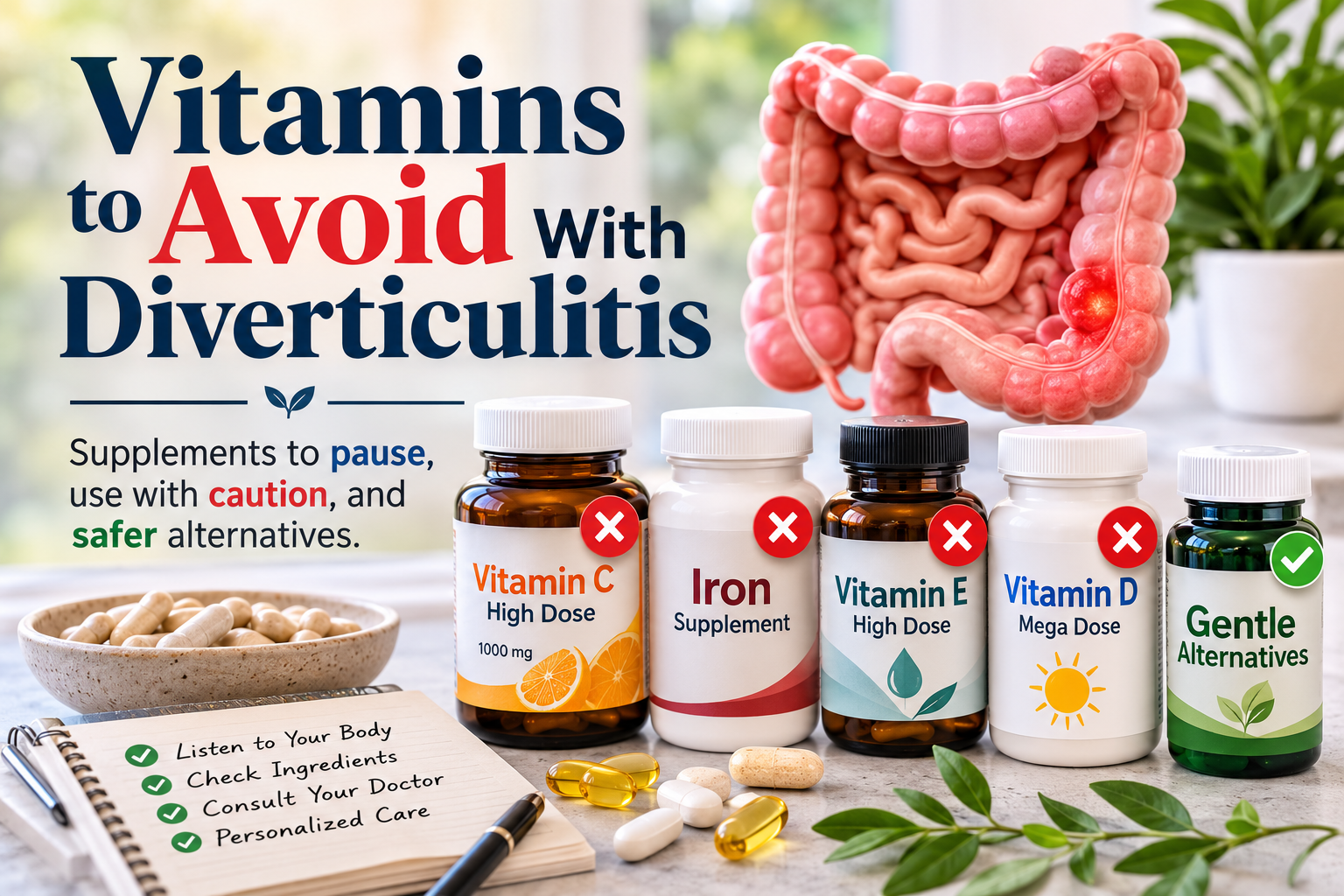
1. High-Dose Vitamin C
Vitamin C from ordinary foods is not known to cause diverticulitis and generally does not need to be avoided. The concern is concentrated, high-dose vitamin C supplementation.
Large amounts of supplemental vitamin C can cause:
- Abdominal cramps
- Nausea
- Loose stools or diarrhea
- General gastrointestinal discomfort
These effects may be especially unwelcome during a diverticulitis flare, when the colon is already inflamed and bowel habits may be unpredictable. Effervescent vitamin C products may also contain sugar alcohols or other ingredients that produce gas or diarrhea in sensitive individuals.
Adults ordinarily need far less vitamin C than the amounts found in many “immune support” powders and megadose tablets. Taking more does not necessarily provide additional protection from infection.
Practical guidance: Avoid megadoses during a flare unless your healthcare provider has specifically prescribed them. A normal amount supplied by food or a standard multivitamin is different from taking several thousand milligrams per day.
2. Iron-Containing Multivitamins
Iron is a mineral rather than a vitamin, but it is included in many multivitamins and is one of the most important supplement ingredients to consider during diverticulitis.
Oral iron commonly causes gastrointestinal side effects, including:
- Constipation
- Abdominal discomfort
- Nausea
- Diarrhea
- Dark-colored stools
Constipation and straining may increase discomfort when someone is already experiencing lower abdominal pain. Iron-related stomach upset can also make it difficult to tell whether diverticulitis symptoms are improving.
However, iron should not be discontinued casually when it has been prescribed for iron-deficiency anemia, blood loss, pregnancy, or another documented medical need. Untreated anemia can cause fatigue, weakness, shortness of breath, and other complications.
Practical guidance: Check the label of your multivitamin for iron. During an acute episode, ask your clinician whether you should continue it, temporarily pause it, change the dose, or use another form. Never assume that dark stools are caused by iron if they appear tarry, sticky, or are accompanied by weakness or dizziness, as these can be signs of gastrointestinal bleeding.
3. High-Dose Vitamin E
Vitamin E in food is generally safe and does not need to be eliminated because of diverticulitis. High-dose vitamin E supplements deserve more caution because vitamin E can affect blood clotting.
This is particularly relevant for people who:
- Take warfarin or another anticoagulant
- Take antiplatelet medication
- Have a history of diverticular bleeding
- Have an upcoming colonoscopy or surgical procedure
- Notice blood in the stool
High supplemental intakes of vitamin E may increase bleeding risk, especially when combined with medications that reduce blood clotting. Diverticular bleeding is not the same condition as diverticulitis, but a person can have both diverticula and a bleeding risk. The NIH Office of Dietary Supplements advises that high vitamin E intake can increase the risk of bleeding.
Practical guidance: Do not take high-dose vitamin E as a self-directed treatment for colon inflammation. Discuss it with a physician or pharmacist if you use blood-thinning medication.
4. Megadoses of Vitamins A and D
Vitamins A and D are fat-soluble. Unlike many water-soluble vitamins, excess amounts can accumulate in the body. These vitamins do not specifically trigger diverticulitis, but unnecessary megadoses can create symptoms or complications that make recovery more difficult.
Too much preformed vitamin A may cause nausea, headache, dizziness, liver injury, or other toxic effects. Excessive vitamin D can raise blood calcium levels, potentially causing nausea, vomiting, weakness, dehydration, confusion, excessive urination, and kidney problems. The NIH warns that excessive vitamin D supplementation can be harmful.
People sometimes take very large doses after reading claims that these vitamins “boost immunity” or reduce inflammation. These claims do not mean megadoses are safe or that they treat diverticulitis.
Practical guidance: Use vitamins A and D within established intake limits unless a clinician is correcting a documented deficiency with a supervised dose.
5. High-Calcium Supplements That Worsen Constipation
Calcium is also a mineral, but it is frequently combined with vitamin D in bone-health supplements. Some calcium products—particularly calcium carbonate—can contribute to constipation, bloating, or stomach discomfort.
That does not mean everyone with diverticulitis must avoid calcium. Adequate calcium is important for bone and muscle health. The issue is whether a particular product is making constipation worse during a flare or recovery.
Practical guidance: Do not stop medically indicated calcium without guidance. A clinician may recommend adjusting the dose, dividing it throughout the day, changing the calcium form, increasing fluids when appropriate, or obtaining more calcium through tolerated foods.
6. Gummies, Powders, and “Gut Health” Blends With Added Ingredients
Sometimes the vitamin itself is not the problem. Supplements may contain ingredients that aggravate digestive symptoms, such as:
- Sugar alcohols, including sorbitol, mannitol, and xylitol
- Large amounts of inulin or chicory-root fiber
- Stimulant laxatives
- Concentrated herbal extracts
- High-dose magnesium
- Caffeine
- Acidic flavoring ingredients
Inulin and other fermentable fibers may cause gas and bloating. Magnesium in certain forms can produce loose stools. Gummies often contain sweeteners that have a laxative effect when consumed in larger amounts.
Fiber may be beneficial after recovery, but suddenly adding a concentrated fiber supplement during an active flare may be uncomfortable and may conflict with a temporary low-fiber plan. NIDDK recommends discussing probiotics and complementary products with a healthcare professional rather than treating them as automatically safe.
Should You Stop Your Multivitamin During a Flare?
Not necessarily. A basic multivitamin taken at the label dose is unlikely to cause diverticulitis. Nevertheless, swallowing a large tablet on an empty stomach can worsen nausea, and ingredients such as iron, calcium, magnesium, or high-dose vitamin C may alter bowel habits.
During an acute attack, review the product with your healthcare provider. Temporary changes may be appropriate if you are following a clear-liquid diet, vomiting, unable to eat, taking antibiotics, or experiencing significant diarrhea or constipation.
Do not stop a supplement prescribed to treat a diagnosed deficiency without consulting the prescriber.
What to Do Instead
During a suspected diverticulitis flare:
- Contact a healthcare professional for an accurate diagnosis.
- Follow the recommended diet and advance foods only as advised.
- Stay hydrated according to your clinician’s instructions.
- Bring a complete list of vitamins, herbs, powders, and medications to your appointment.
- Avoid starting a new “detox,” cleanse, laxative, fiber loading program, or high-dose supplement.
- Seek urgent care for severe or worsening pain, persistent fever, repeated vomiting, abdominal swelling, inability to pass stool or gas, fainting, or significant rectal bleeding.
The goal is not to fear vitamins. It is to avoid unnecessary ingredients and megadoses that may complicate symptoms while your digestive system recovers.
Questions and Answers
Can vitamins cause diverticulitis?
There is no good evidence that ordinary vitamin intake causes diverticulitis. Diet, genetics, age, medication use, physical activity, smoking, body weight, and other factors may influence diverticular disease, but a standard vitamin has not been established as a direct cause.
Is vitamin C bad for diverticulitis?
Vitamin C from food is not considered harmful. High-dose supplements can cause cramps and diarrhea, so they may be poorly tolerated during an acute flare. Ask a clinician before using megadoses.
Can I take vitamin D with diverticulitis?
Most people can take an appropriate vitamin D dose. Vitamin D is not known to trigger diverticulitis. Avoid unsupervised megadoses, because excessive vitamin D can cause toxicity and high blood calcium.
Should I stop taking iron?
Do not stop prescribed iron without medical guidance. Iron can cause constipation, nausea, abdominal pain, or diarrhea, so your clinician may adjust your regimen during a flare. Iron may still be essential if you have anemia or blood loss.
Can I take a multivitamin while taking antibiotics?
It depends on the antibiotic and the multivitamin’s ingredients. Minerals such as calcium, magnesium, iron, and zinc can reduce the absorption of certain antibiotics when taken too close together. Ask your pharmacist how many hours to separate them.
Should I avoid fiber supplements during diverticulitis?
During an acute attack, your clinician may temporarily recommend clear liquids or a low-fiber plan. In that situation, do not add a fiber supplement unless advised. After recovery, fiber-containing foods or supplements may be recommended to support regular bowel movements and long-term colon health.
Are gummy vitamins easier on the digestive system?
Not always. Gummies may be easier to swallow, but some contain sugar alcohols, inulin, or large amounts of sweeteners that cause gas, cramping, or diarrhea. Read the full ingredient list.
Are probiotics safe during diverticulitis?
Evidence for probiotics in diverticular disease is not strong enough to assume that every product is helpful. Probiotic supplements can also cause gas or bloating. Discuss their use with a gastroenterologist, especially during an acute episode.
What vitamins help heal diverticulitis?
No vitamin has been proven to cure an acute diverticulitis attack. Treatment may involve temporary dietary modification, pain management, medical monitoring and, in selected cases, antibiotics or surgery. Correcting a confirmed nutrient deficiency may support overall health but does not replace diverticulitis treatment.
When should I seek immediate medical attention?
Seek urgent medical care for severe or increasing abdominal pain, fever, repeated vomiting, a rigid or swollen abdomen, inability to pass stool or gas, confusion, fainting, heavy rectal bleeding, or black tarry stools. These symptoms may indicate an abscess, obstruction, perforation, significant bleeding, or another medical emergency.
References
- National Institute of Diabetes and Digestive and Kidney Diseases. Treatment for Diverticular Disease.
https://www.niddk.nih.gov/health-information/digestive-diseases/diverticulosis-diverticulitis/treatment - National Institute of Diabetes and Digestive and Kidney Diseases. Eating, Diet, & Nutrition for Diverticular Disease.
https://www.niddk.nih.gov/health-information/digestive-diseases/diverticulosis-diverticulitis/eating-diet-nutrition - Peery AF, Shaukat A, Strate LL. AGA Clinical Practice Update on Medical Management of Colonic Diverticulitis: Expert Review. Gastroenterology. 2021;160(3):906–911.e1.
https://www.gastrojournal.org/article/S0016-5085(20)35512-8/fulltext - Mayo Clinic. Diverticulitis Diet.
https://www.mayoclinic.org/healthy-lifestyle/nutrition-and-healthy-eating/in-depth/diverticulitis-diet/art-20048499 - Mayo Clinic. Diverticulitis: Can Certain Foods Trigger an Attack?
https://www.mayoclinic.org/healthy-lifestyle/nutrition-and-healthy-eating/expert-answers/diverticulitis-diet/faq-20058293 - National Institutes of Health, Office of Dietary Supplements. Vitamin C Fact Sheet for Health Professionals.
https://ods.od.nih.gov/factsheets/VitaminC-HealthProfessional/ - National Institutes of Health, Office of Dietary Supplements. Iron Fact Sheet for Health Professionals.
https://ods.od.nih.gov/factsheets/Iron-HealthProfessional/ - National Institutes of Health, Office of Dietary Supplements. Vitamin E Fact Sheet for Health Professionals.
https://ods.od.nih.gov/factsheets/VitaminE-HealthProfessional/ - National Institutes of Health, Office of Dietary Supplements. Vitamin D Fact Sheet for Health Professionals.
https://ods.od.nih.gov/factsheets/VitaminD-HealthProfessional/ - National Institutes of Health, Office of Dietary Supplements. Vitamin A and Carotenoids Fact Sheet for Health Professionals.
https://ods.od.nih.gov/factsheets/VitaminA-HealthProfessional/ - National Institutes of Health, Office of Dietary Supplements. Calcium Fact Sheet for Health Professionals.
https://ods.od.nih.gov/factsheets/Calcium-HealthProfessional/ - National Institutes of Health, Office of Dietary Supplements. Magnesium Fact Sheet for Health Professionals.
https://ods.od.nih.gov/factsheets/Magnesium-HealthProfessional/ - American Society of Colon and Rectal Surgeons. Diverticular Disease: Expanded Information.
https://fascrs.org/Web/Web/Patients/Diseases-and-Conditions/A-Z/Diverticular-Disease-Expanded-Information.aspx