Spend just five minutes searching social media for “diverticulitis diet,” and you’ll quickly find thousands of recipes claiming to be the perfect meal for diverticulitis.
Chicken casseroles. Smoothies. Salads. Chili. Pasta dishes. High-fiber bowls. Low-carb recipes. Even desserts.
The problem?
Many of these posts are labeled simply as “diverticulitis diet” without explaining one critically important fact:
There is no single diverticulitis diet.
This misunderstanding has become one of the biggest sources of confusion for people who have recently been diagnosed or are trying to recover from a painful flare-up. Following the wrong type of diet at the wrong stage can increase discomfort, slow recovery, and leave people wondering why they are not feeling better.
At Calming Blends, we believe one message needs to be made clear:
A diverticulitis diet changes as your body heals.
Why Social Media Gets the Diverticulitis Diet Wrong
Social media rewards simplicity. People love quick recipes, short videos, and catchy titles like “Best Diverticulitis Breakfast” or “The Ultimate Diverticulitis Meal.”
While many of these recipes may be healthy, they often fail to answer one essential question:
What stage of diverticulitis is this recipe actually for?
Someone experiencing severe abdominal pain during an active diverticulitis flare has very different nutritional needs than someone who recovered weeks ago and is trying to prevent another attack.
Unfortunately, social media often combines these completely different dietary approaches under one label, leaving patients confused.
Diverticulosis and Diverticulitis Are Not the Same
Before discussing diet, it is important to understand the difference.
Diverticulosis means small pouches, called diverticula, have formed in the wall of the colon. Many people have diverticulosis without symptoms.
Diverticulitis occurs when one or more of those pouches become inflamed or infected.
Common symptoms may include:
- Lower abdominal pain
- Fever
- Nausea
- Bloating
- Changes in bowel habits
- Abdominal tenderness
Because these are different conditions, the dietary recommendations are also different. People with diverticulosis are often encouraged to follow a long-term high-fiber diet, while people with active diverticulitis may need to temporarily reduce digestive workload before gradually returning to fiber.
The Three Stages of a Proper Diverticulitis Diet
One of the biggest myths online is that there is one list of “diverticulitis foods.”
There is not.
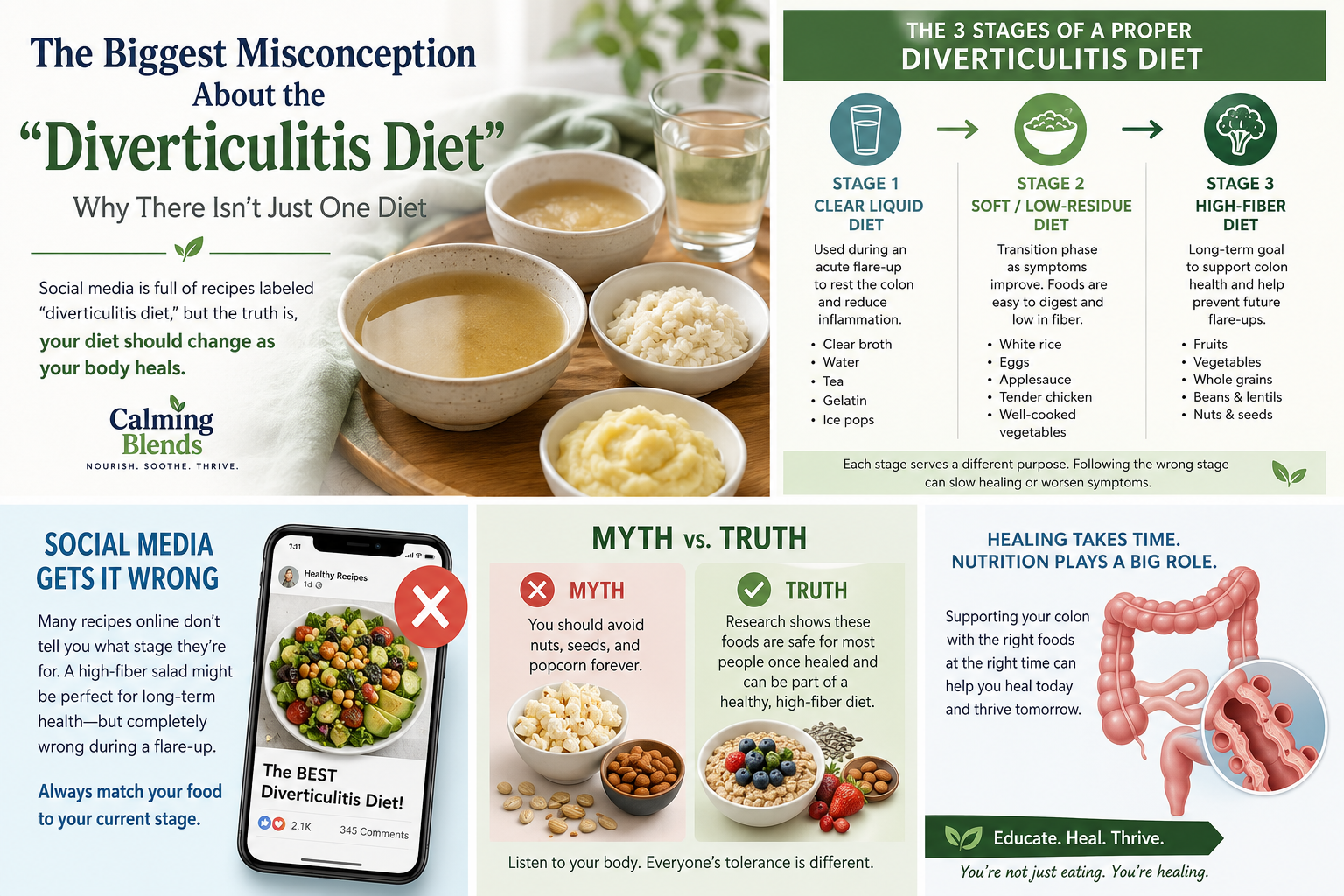
A proper diverticulitis nutrition plan usually progresses through three stages:
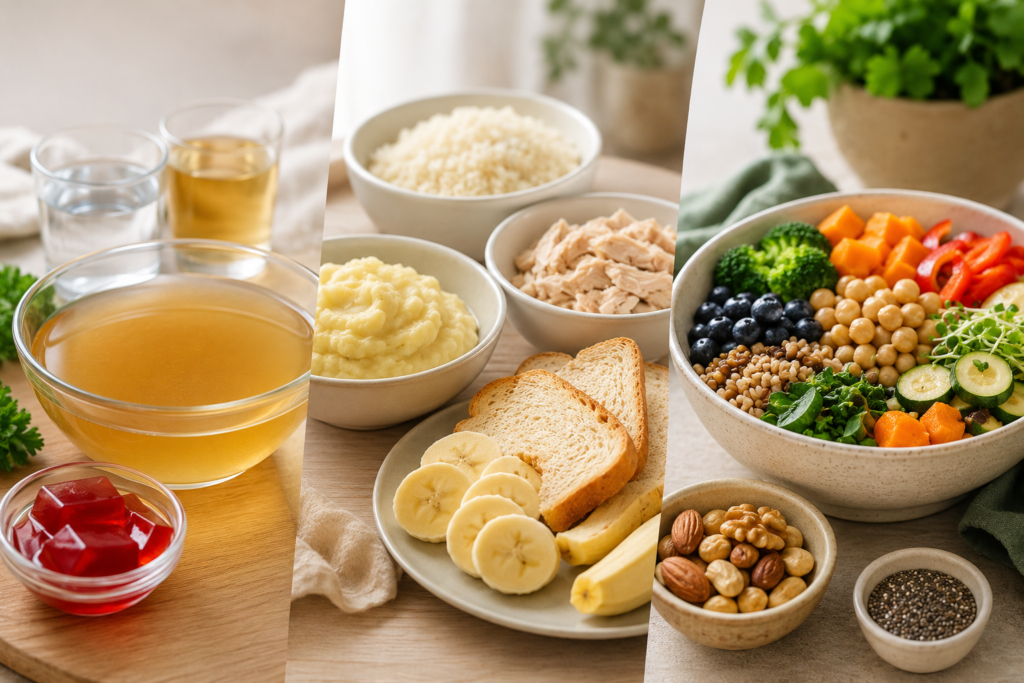
- Clear liquid diet
- Soft or low-residue diet
- High-fiber maintenance diet
Stage 1: Clear Liquid Diet
During an acute flare-up, your healthcare provider may recommend a clear liquid diet for a short period of time.
This stage is designed to give the colon a chance to rest while inflammation begins to calm down.
Examples of clear liquids may include:
- Clear broth
- Water
- Tea
- Apple juice without pulp
- Gelatin
- Ice pops without fruit pieces
This stage is not meant to provide complete nutrition. It is usually temporary and should be followed under the guidance of a healthcare professional.
Learn more in our Diverticulitis Diet Guide.
Stage 2: Soft or Low-Residue Diet
As pain and symptoms begin to improve, many people transition into a soft or low-residue diet.
Now the goal shifts from resting the colon to providing gentle nourishment while still limiting irritation.
Foods in this stage may include:
- White rice
- Mashed potatoes without skins
- Eggs
- Tender chicken
- White bread
- Applesauce
- Yogurt
- Well-cooked vegetables without skins or seeds
Fiber is intentionally kept lower during this phase because bulky stools can still irritate healing tissue.
This is where many social media recipes become problematic. A kale salad loaded with beans, nuts, broccoli, quinoa, and raw vegetables may be excellent for long-term colon health, but it may be completely inappropriate for someone recovering from an active flare-up.
For more support, read our diverticulitis diet and recovery guide.
Stage 3: High-Fiber Maintenance Diet
Once healing has occurred, the focus changes completely.
Now fiber becomes an important part of long-term digestive health.
High-fiber foods may include:
- Fruits
- Vegetables
- Beans
- Lentils
- Whole grains
- Oats
- Nuts
- Seeds
Many recipes labeled “diverticulitis diet” online actually belong in this maintenance stage, not during an active flare.
That is why labeling every high-fiber recipe as a “diverticulitis diet” can be misleading. If someone follows a high-fiber recipe during severe inflammation, they may unintentionally make symptoms worse.
Why Timing Matters More Than the Food
Instead of asking, “Is this food good for diverticulitis?” a better question is:
“Is this food appropriate for my current stage of recovery?”
The exact same food may be helpful later but uncomfortable today.
Timing matters.
Myth: Certain Foods Are Always Good or Bad
Many websites publish long lists of foods to permanently avoid with diverticulitis.
Reality is more nuanced.
For years, people were told to avoid nuts, seeds, and popcorn. However, current research does not show that these foods increase the risk of diverticulitis flare-ups for most people. In fact, once a flare has resolved, these foods can be valuable sources of fiber.
That does not mean everyone tolerates them equally well. Diverticulitis management is highly individual. Some people may identify personal trigger foods, while others tolerate most foods once fully healed.
Listening to your body is just as important as following general dietary guidelines.
Why There Is So Much Conflicting Diverticulitis Diet Advice
If you have felt overwhelmed by conflicting information, you are not alone.
One article says eat fiber. Another says avoid fiber. One recipe recommends smoothies. Another recommends soup. Someone else says to avoid vegetables altogether.
Who is right?
In many cases, these recommendations are talking about completely different stages of diverticulitis.
Without explaining timing, the advice sounds contradictory when it really is not.
A Smarter Way to Think About Diverticulitis Nutrition
Instead of searching for “the perfect diverticulitis diet,” think of your recovery as a progression.
Your nutrition changes as your colon heals:
- Clear liquids during severe symptoms
- Soft or low-residue foods while healing
- Gradually increased fiber for long-term digestive health
Each stage serves a different purpose. Skipping stages, or following the wrong one, can make recovery more difficult.
Trust Education Over Viral Posts
Social media can be a wonderful source of recipe inspiration, but recipes alone do not explain when they should be eaten.
Education is far more valuable than a viral food post.
Understanding the three-stage approach allows you to choose foods that match where you are in recovery rather than relying on generalized advice from strangers online.
At Calming Blends, our goal is to help people better understand diverticulitis, reduce confusion, and make informed decisions alongside their healthcare provider.
Continue Learning
Explore more helpful guides from Calming Blends:
- Diverticulitis Diet Overview
- Clear Liquid Diet for Diverticulitis
- Low Residue Diet for Diverticulitis
- High Fiber Diet After Diverticulitis
References
- Mayo Clinic. Diverticulitis diet: Foods to eat and avoid. https://www.mayoclinic.org
- Johns Hopkins Medicine. Foods for diverticulosis and diverticulitis. https://www.hopkinsmedicine.org
- Stanford Health Care. Low fiber diet for diverticulitis. https://stanfordhealthcare.org